FREC 4 · Qualsafe Awards
Patient Assessment and Management
Assessment, triage and vital signs at level 4, the structure and conduction of the heart, coronary artery disease, and supraglottic airways and medical gases.
The first component of FREC 4, and where the step up from level 3 is clearest. Assessment is revisited with vital signs measured and interpreted rather than simply observed. The largest block is cardiac: the structure of the heart, its conduction system and the cardiac cycle, coronary artery disease and what disease does to cardiac function — the physiology the ECG topic then asks you to read off a strip. The component closes on the extended skills, supraglottic airway devices and the knowledge and administration of medical gases.
What this topic covers
These are the sub-topics the app's 59 questions for this topic are grouped into, with the number of questions on each. They are a fair map of where the weight sits.
| Sub-topic | Questions |
|---|---|
| Cardiac structure disease and ECG | 24 |
| Airway and medical gas management | 18 |
| Patient assessment and vital signs | 17 |
Study guide
The first FREC 4 component, and the clearest demonstration of what level 4 adds. FREC 3 asks you to notice; FREC 4 asks you to measure, interpret and explain. Nearly half the topic is cardiac, and it is deliberately positioned as the physiology you will need before the ECG paper.
Patient assessment and vital signs
The level 3 assessment, taken further. Observations are now measured and interpreted rather than described.
- Each vital sign is examined on what it means, what changes it, and what a trend in it indicates — a single reading is rarely the answer.
- Triage at level 4 is about prioritising between patients, not only assessing one.
- Questions frequently give two sets of observations taken minutes apart, because the change is the finding.
Cardiac structure, disease and the ECG
The largest block in the component, and the bridge to the ECG topic.
- The structure of the heart and its conduction system are examined as the reason a rhythm strip looks the way it does.
- The cardiac cycle links mechanical events to electrical ones; questions ask which part of the cycle a described event belongs to.
- Coronary artery disease is examined through its effects on cardiac function, which is what makes the ACS patterns in the ECG topic recognisable rather than memorised.
Airway and medical gas management
The extended skills: supraglottic airway devices, and the knowledge and administration of medical gases.
- Supraglottic airway devices are examined on indications, sizing and the checks around insertion, not just on the insertion itself.
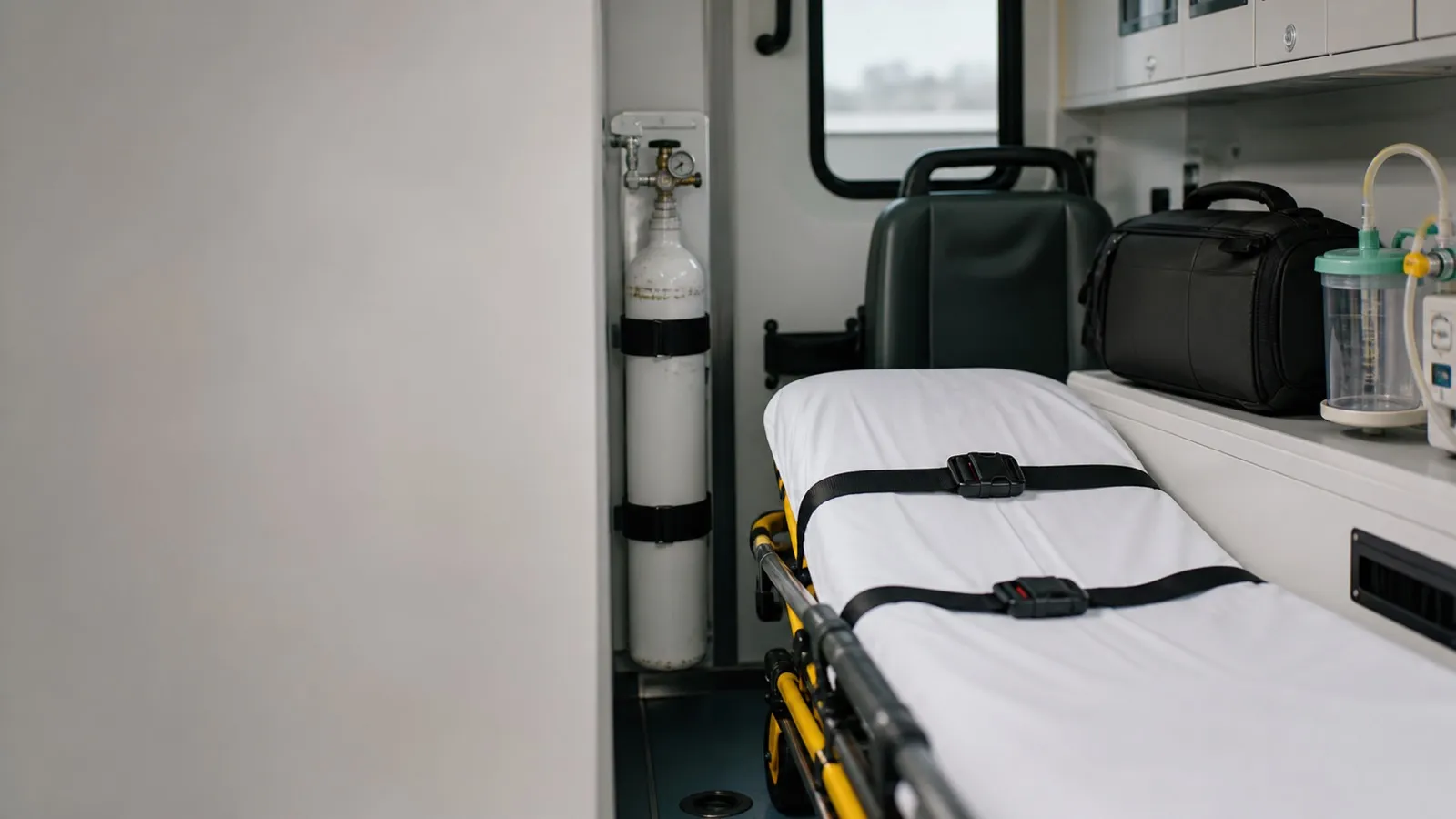
- Gas knowledge covers the cylinders and equipment as well as the clinical use — identification, handling and storage all appear.
- Administration questions test the decision and the device together. Any target figure should come from current guidance; the app states none.
In the exam Level 4 questions punish level 3 answers. Where a FREC 3 question would accept "recognise and call for help", this component expects you to say what you measured, what it means and what you would do about it. Revise the cardiac block before the ECG topic, not after — the strips become far easier once the conduction system is solid.
Practise this topic now
20 questions from this topic, free, with the explanation shown as soon as you answer. No sign-up, and nothing is recorded.
Start the Patient Assessment quizCarry on with
Emergency Trauma Care
Respiratory, musculoskeletal and nervous system anatomy, thoracic trauma and the systematic survey, and two exceptional incident types: sexual assault and major incidents.
Focused and Urgent Care
Paediatric development and the sick or injured child, adult medical conditions including mental health, respiratory illness and sepsis, plus childbirth and assisting a clinician.
ECG Recognition
Sinus rhythms, atrial and supraventricular rhythms, ventricular rhythms and ectopy, conduction abnormalities, and arrest and ACS patterns.
Revise anywhere, with the whole FREC 3 & 4 bank
This site publishes the app's free sample — 80 of 585 questions, across 4 of 8 topics. FREC 3 & 4 Exam Prep carries the full bank offline across all 2 levels, so you can revise on the bus, between patients, or the night before.
- All 585 questions
- Every question across all 2 levels, including the 4 topics this site cannot unlock.
- 40-question mock test
- Timed at 60 minutes, drawn from one level at a time.
- An explanation every time
- Every answer explains itself and cites where it comes from, right or wrong.
- Progress you can see
- History and per-topic results show which levels still need the work.


For iPhone, iPad and Android.