Unit 10 is the smallest unit with the highest stakes, and it is examined differently from the rest of the Diploma. It rarely asks you to describe a treatment in detail. It asks you to recognise what is happening and to say what you do first.
That pairing — presentation and first action — is where nearly all the marks are.
Structure beats speed
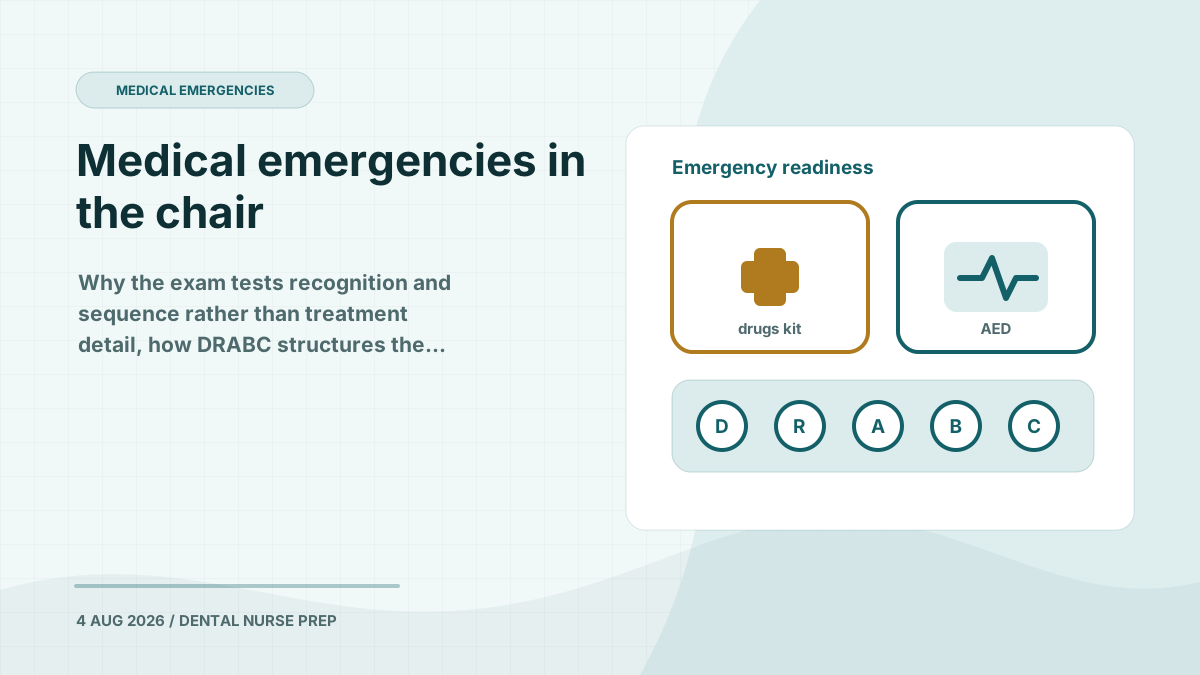
Under pressure, the instinct is to act on the most obvious sign. A structured assessment stops that, by forcing the same order every time:
- D — Danger. Is it safe to approach? An unsafe rescuer becomes a second casualty.
- R — Response. Does the patient respond to voice or to a gentle shake?
- A — Airway. Is it open and clear?
- B — Breathing. Are they breathing normally? Agonal gasps are not normal breathing.
- C — Circulation. Signs of life, and act accordingly.
Calling for help early is part of the response, not an admission that you cannot cope. In a dental practice that means summoning the team and the emergency services in parallel with starting treatment, not after it.
Basic life support
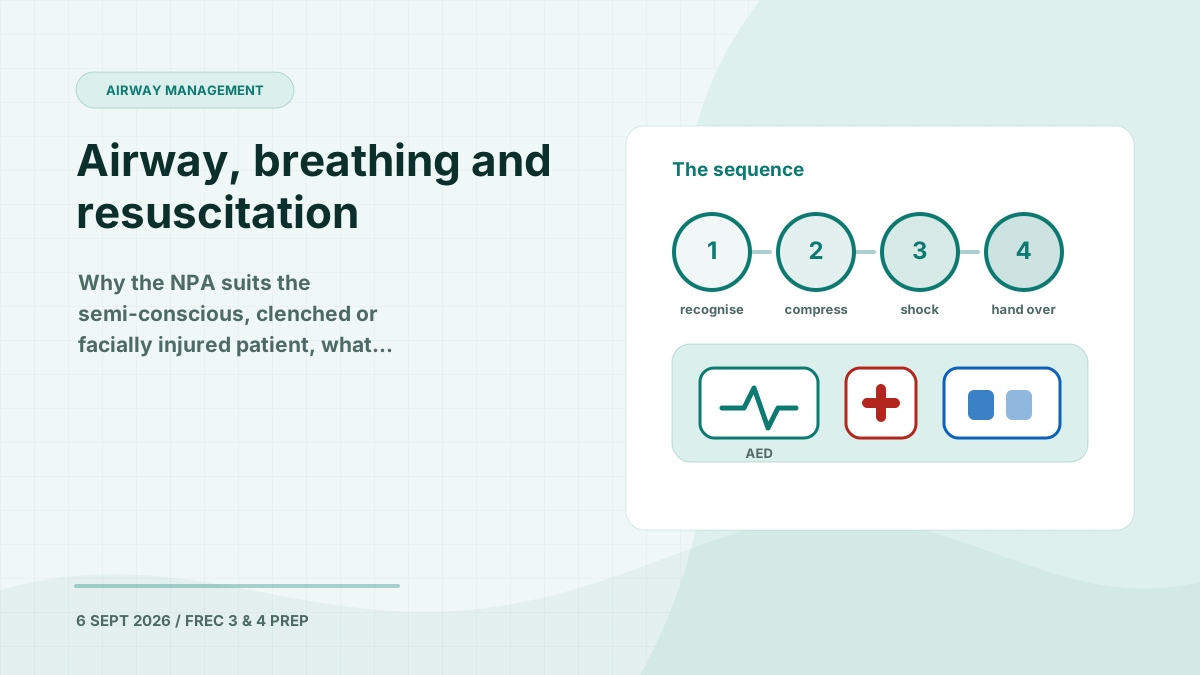
For a patient who is unresponsive and not breathing normally, chest compressions are started promptly and interruptions are kept to a minimum — perfusion falls immediately when compressions stop.
An automated external defibrillator is applied as soon as it is available, and its prompts are followed. It will not shock a rhythm that should not be shocked, which is precisely why it can be used by any trained member of the team.
The specific ratios, rates and depths come from current Resuscitation Council UK guidance. That guidance is updated periodically, so train against the current version rather than a remembered one — and this is one place where “I learned it a few years ago” is a genuine risk rather than a technicality.
Children are not small adults
Paediatric arrest is more commonly respiratory in origin than cardiac, and the resuscitation sequence reflects that. The Resuscitation Council sets out the modifications; know that they exist and roughly why, because that reasoning is what tends to be tested.
The emergencies you are most likely to see
Each has a recognisable picture and a defined first response. Being able to tell them apart matters because the immediate treatments differ substantially:
| Presentation | Points towards |
|---|---|
| Rapid onset swelling, breathing difficulty, widespread rash, collapse | Anaphylaxis |
| Sweating, confusion, aggression or drowsiness in a diabetic patient | Hypoglycaemia |
| Central crushing chest pain, possibly radiating, with sweating and nausea | Angina or myocardial infarction |
| Breathlessness, wheeze, difficulty completing sentences | Asthma |
| Sudden collapse with convulsive movements | Epileptic seizure |
| Brief loss of consciousness, pale and clammy, recovering when laid flat | Syncope |
| Sudden inability to speak or breathe, clutching the throat | Choking |
Syncope is the one most often confused with something worse, and the one whose management differs most — which is exactly why questions like to include it.
Preparedness is the unglamorous half
Equipment that cannot be found, or that has expired, is equipment the practice does not have.
- Emergency drugs and equipment are checked on a defined schedule, and the checks are recorded.
- Everyone should know where the emergency kit and the defibrillator are, without having to look.
- All staff, clinical and non-clinical, are trained in their role, and that training is repeated.
A practice that owns a defibrillator nobody can locate has bought reassurance rather than capability.
In the exam. When a question describes a patient, work out which emergency it is before you look at the answers. Then pick the first action for that emergency. Reading the options first tends to make two plausible ones look equally good.
Where this sits in the Diploma
This is Unit 10, Risks and Medical Emergencies. Its question pool is part of the app rather than the free tier, but the full study guide is free to read here.
Nothing on this page is clinical guidance. It is revision framing for an exam — for practice, work from current Resuscitation Council UK guidance, your practice protocol and your own training.
- Medical emergencies
- Patient safety
Frequently asked
What should be checked first in a medical emergency?
Danger, then response, then airway, breathing and circulation. A structured order prevents a serious problem being missed because a more obvious one was treated first.
Who in a dental practice needs emergency training?
All staff, clinical and non-clinical, need training in their own role in an emergency, and that training is repeated. A receptionist who knows where the defibrillator is and how to summon help is part of the response.
Why does paediatric resuscitation differ from adult?
Because cardiac arrest in children is more commonly respiratory in origin, the emphasis and sequence differ. Follow current Resuscitation Council UK guidance, which sets out the modifications.