

Three words get used loosely in conversation and precisely in the exam: cleaning, disinfection and sterilisation. Getting them the wrong way round is one of the most common avoidable losses in Unit 1.
The three terms
Cleaning physically removes visible contamination — blood, saliva, debris. It reduces the microbial load but makes no claim to a particular level. It is also a prerequisite: an instrument that has not been cleaned cannot be reliably sterilised, because organic matter shields microorganisms from the process.
Disinfection reduces microorganisms to a level unlikely to cause harm. It does not reliably destroy bacterial spores. Suitable for surfaces and some equipment; not sufficient for instruments that will penetrate tissue.
Sterilisation destroys all microorganisms, including spores. This is what an autoclave does, and it is the standard required for instruments used inside the mouth.
They form a sequence, not a menu:
| Stage | Removes | Destroys spores? | Typical use |
|---|---|---|---|
| Cleaning | Visible contamination and much of the load | No | Every instrument, first, always |
| Disinfection | Most microorganisms | No | Surfaces, some equipment |
| Sterilisation | All microorganisms | Yes | Instruments used in the mouth |
Why the room is laid out the way it is
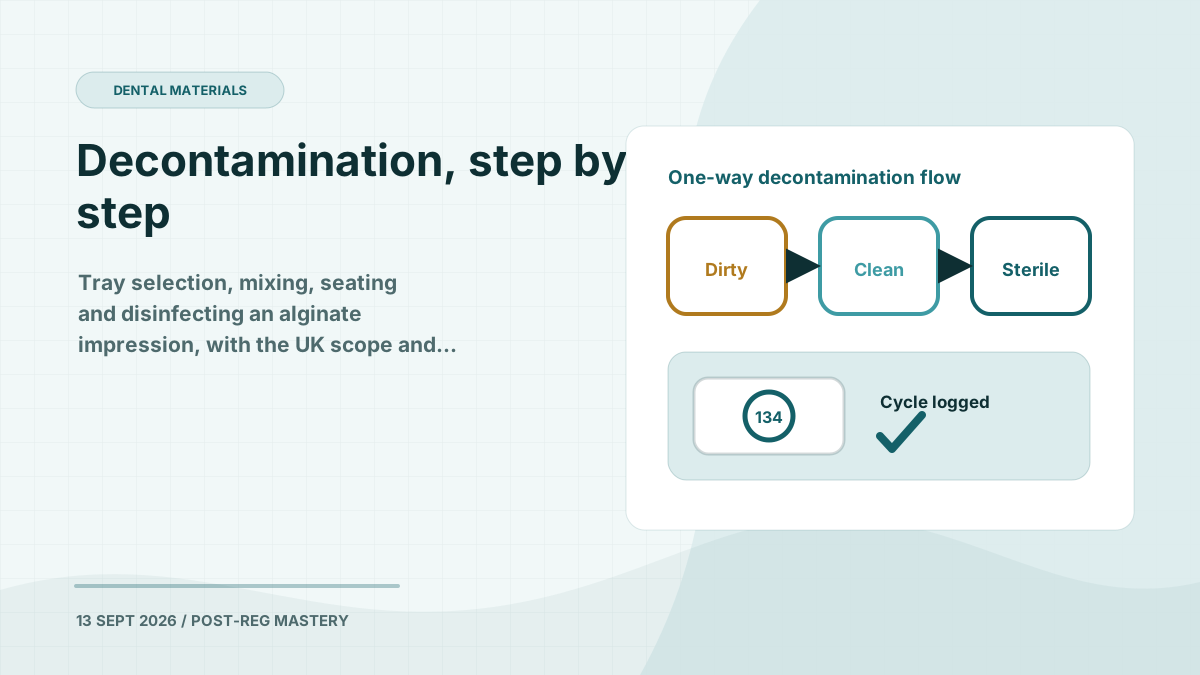
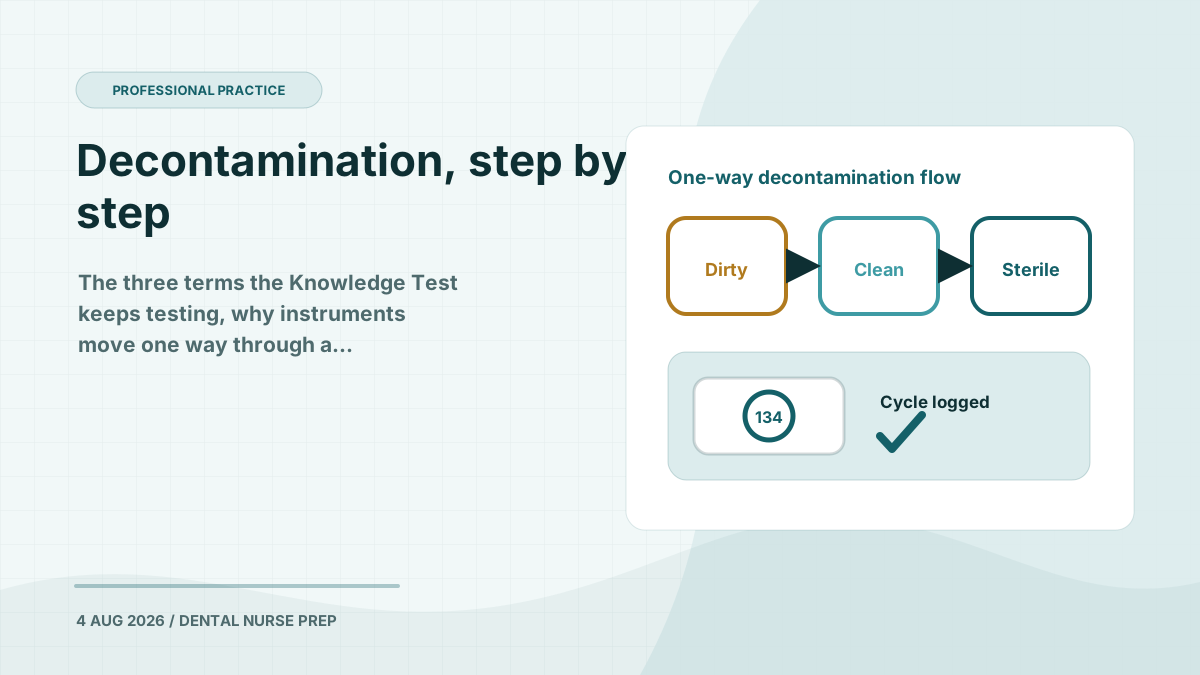
A decontamination area runs one way: dirty in at one end, sterile out at the other, with no route back.
That is a deliberate design choice, and it is worth understanding rather than memorising. Human beings under time pressure take shortcuts. A layout where the shortcut is physically awkward prevents more contamination than a rule saying not to take it.
The flow is:
- Receipt and sorting of used instruments
- Cleaning — manual, ultrasonic, or a washer-disinfector
- Inspection — checking the instrument is actually clean and undamaged before it goes further
- Sterilisation in the autoclave
- Storage of processed instruments, protected from recontamination
Skip the inspection step and you sterilise a dirty instrument, which produces something sterile and still unusable.
The autoclave and its record
The autoclave does the sterilising. The record proves it did.
Cycle parameters are monitored and logged, and tests are performed to defined schedules. This is not paperwork for its own sake: without the record there is no evidence that a particular load was successfully processed. If a question asks what the log is for, the answer is evidence — not compliance for compliance’s sake, and not a maintenance schedule.
PPE protects in both directions
Personal protective equipment is not only about protecting the clinician. Gloves, masks and eye protection also protect the patient from organisms carried by the team, and are changed between patients for exactly that reason.
The same principle explains why single-use items are single-use. “It looks clean” is not a decontamination process.
In the exam. Watch for questions that describe a plausible-sounding shortcut — reusing something single-use, skipping inspection because the load looks fine, disinfecting an instrument that should be sterilised. The answer is the one that names the correct process for that item.
Where this sits in the Diploma
Infection prevention, control and decontamination is one of the largest sub-topics in Unit 1, Professional Practice — the biggest unit in the qualification, covering the GDC Standards, health and safety legislation, consent, records and safeguarding alongside this.
If you want to go deeper than a revision summary, there is a whole book on this one topic — it is in our recommended books and kit, alongside the core Diploma texts.
You can practise Unit 1 questions free, with the explanation and its source shown as soon as you answer.
- Professional Practice
- Infection control
Frequently asked
What is the difference between disinfection and sterilisation?
Disinfection reduces the number of microorganisms to a level unlikely to cause harm. Sterilisation destroys all microorganisms including bacterial spores. They are not interchangeable, and only sterilisation is adequate for instruments that penetrate tissue.
Why does a decontamination room have a one-way flow?
So that instruments move from dirty to clean to sterile without ever crossing back. Recontamination is the failure the layout is designed to make physically difficult rather than merely discouraged.
Why are autoclave cycles recorded?
The record is the evidence that the process worked on that occasion. Without it there is no way to demonstrate that a given load was successfully processed, which matters both for patient safety and for inspection.