

The Basic Periodontal Examination is a screening tool, not a diagnosis. It exists to answer one question quickly: does this patient need a more detailed periodontal assessment, and how urgently?
It is also one of the most reliably examined topics in Unit 5, because the codes are precise and the thresholds are specific — which makes them easy to write unambiguous questions about, and easy to get subtly wrong under pressure.
How the examination works
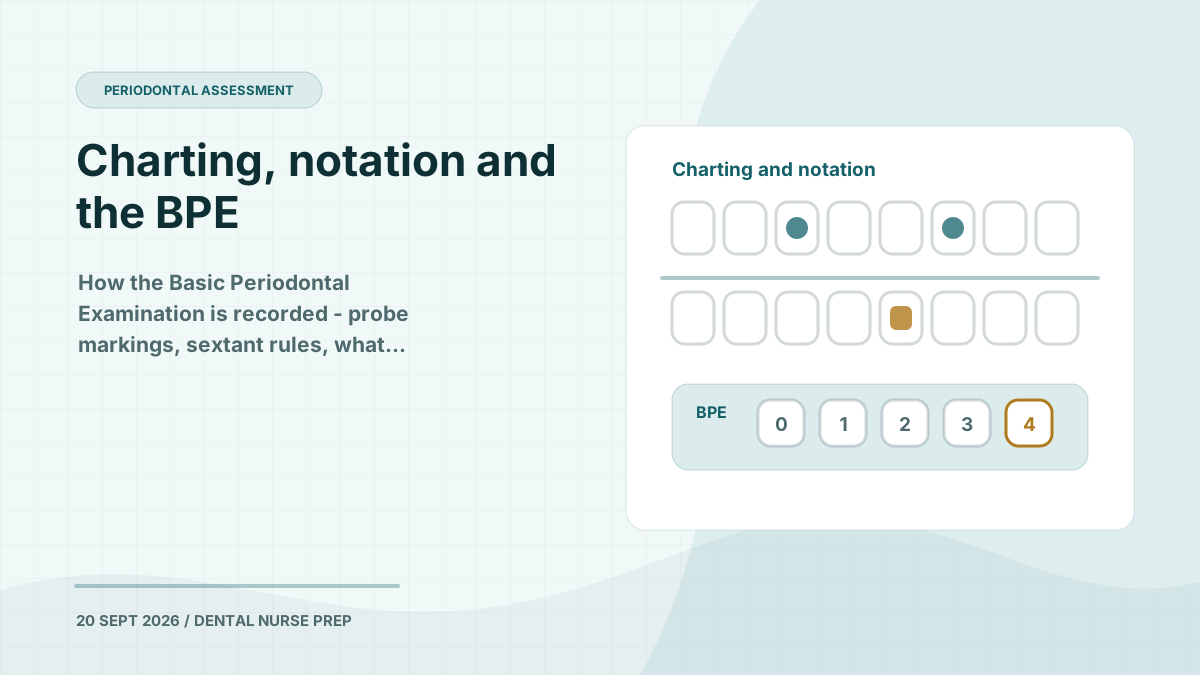
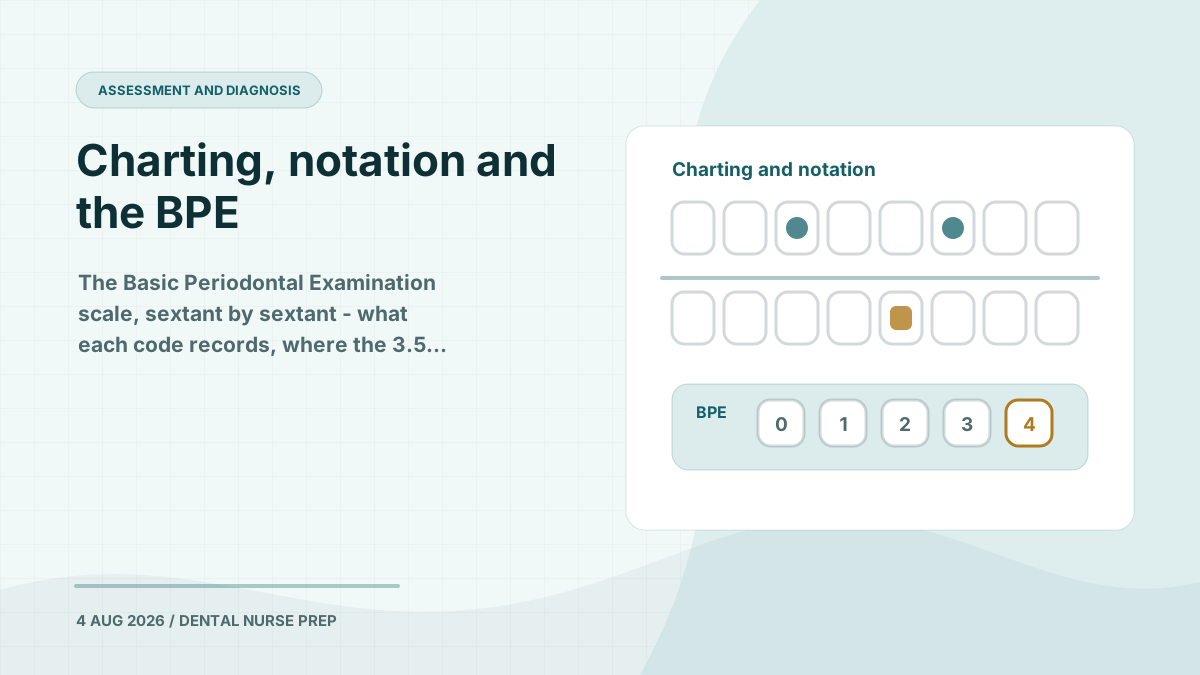
The mouth is divided into six sextants. A probe is walked around the teeth in each sextant, and the sextant is given a single code: the highest code found anywhere within it. One deep pocket in a sextant of otherwise healthy tissue still scores that sextant at the higher code.
The codes
| Code | What it records |
|---|---|
| 0 | Healthy tissues. No bleeding on probing, no calculus, no pockets over 3.5 mm. |
| 1 | Bleeding on probing. No calculus or plaque retention factors, no pockets over 3.5 mm. |
| 2 | Calculus or another plaque retention factor present, such as an overhanging restoration margin. Still no pocket over 3.5 mm. |
| 3 | A pocket up to 5.5 mm deep. |
| 4 | A pocket deeper than 5.5 mm. |
| * | Furcation involvement. Recorded in addition to the code, e.g. 3*. |
Two thresholds carry most of the marks: 3.5 mm separates codes 0–2 from code 3, and 5.5 mm separates code 3 from code 4.
The pattern behind the scale
Read down the table and there is a logic to it, which is worth internalising because it makes the codes much harder to muddle:
- Codes 0 and 1 are about bleeding — is there inflammation?
- Code 2 adds retention — is there something holding plaque there?
- Codes 3 and 4 are about depth — has attachment actually been lost?
Higher codes always mean a more serious problem. That sounds obvious, and it is exactly the kind of thing a true/false question will check.
What the code does not tell you
A BPE code is a screening result. It is not:
- a count of affected teeth
- a measure of how long disease has been present
- a diagnosis in itself
- a reflection of how well the patient brushes
Questions sometimes offer one of those as a distractor precisely because they sound plausible.
What happens next
The code drives the response. Low codes point to prevention and oral hygiene support; higher codes point to more detailed assessment, including full periodontal charting and radiographs where indicated. A code 4 in any sextant means the whole mouth needs the fuller assessment, not just that sextant.
The specifics of what follows each code are set out in the British Society of Periodontology’s guidance, and that guidance is updated periodically — always work from the current published version, and from your practice’s own protocol.
In the exam. The two most common ways to lose this mark are swapping code 2 and code 3, and putting the 5.5 mm boundary in the wrong place. If you learn nothing else: code 3 is up to 5.5 mm, code 4 is deeper than 5.5 mm.
Where this sits in the Diploma
The BPE belongs to the periodontal assessment part of Unit 5, Assessment and Diagnosis — the largest unit in the qualification, and the one that runs from general anatomy and physiology all the way through to charting and radiography.
You can practise Unit 5 questions free, including ones on periodontal assessment, with the explanation shown as soon as you answer.
- Assessment and Diagnosis
- Periodontal
Frequently asked
What does BPE code 4 mean?
A pocket deeper than 5.5 mm — the deepest category on the scale. A pocket up to 5.5 mm is code 3, and a shallow pocket with calculus or another plaque retention factor is code 2.
What does the asterisk mean in a BPE score?
Furcation involvement. It is recorded alongside the code for that sextant, so a sextant can be scored, for example, 3*.
Does a higher BPE code always mean more serious disease?
Yes. The scale runs from healthy tissues at code 0 up to deep pocketing at code 4, so a higher code indicates a more serious periodontal problem. The code does not count teeth or measure elapsed time.