FREC 3 · Qualsafe Awards
Anatomy and Physiology
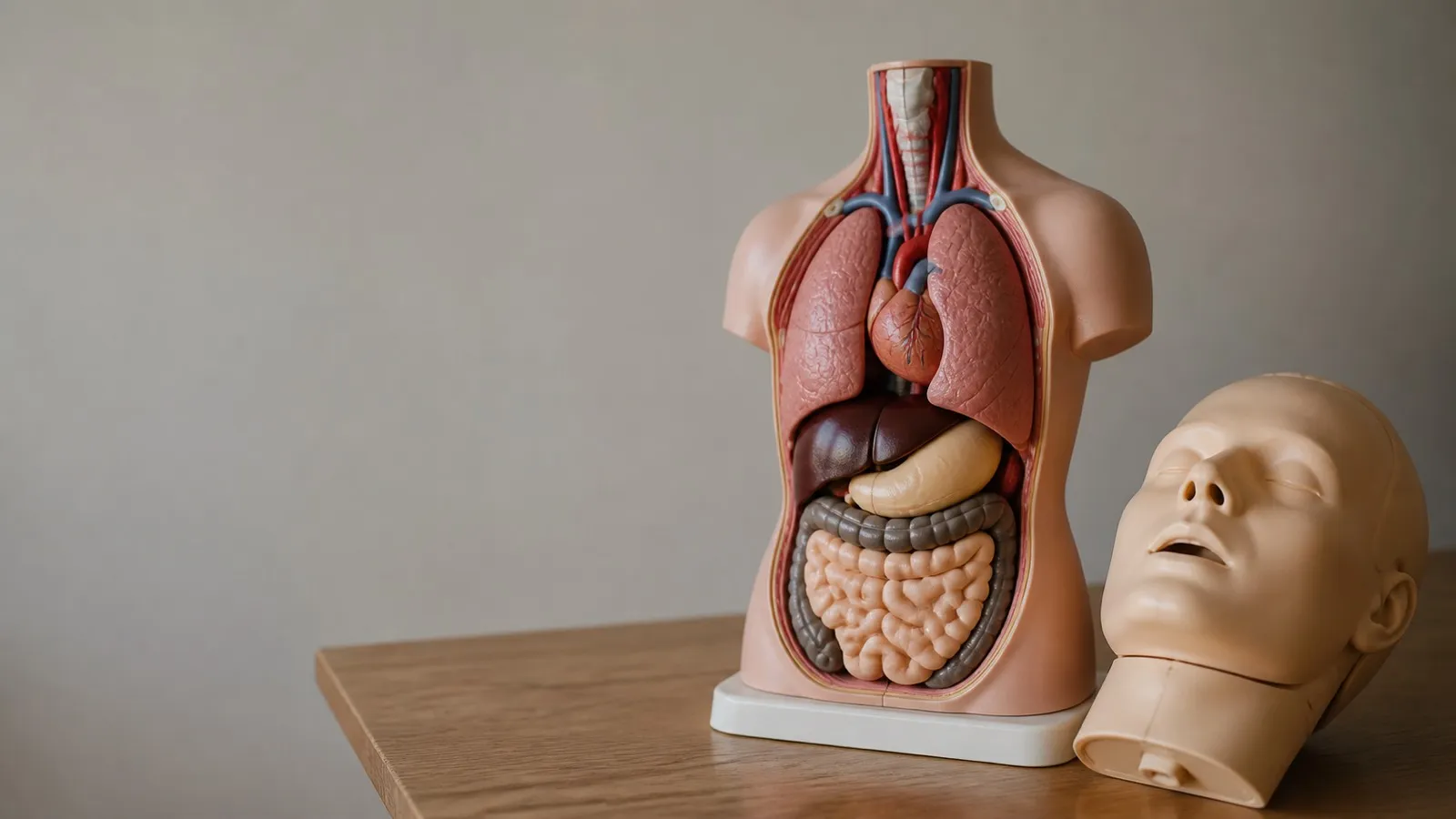
The respiratory, cardiovascular, nervous and musculoskeletal systems, plus the digestive, endocrine, integumentary and reproductive systems FREC touches on.
The topic the specification assumes rather than sets out. It is evenly split across five body systems, and each one underpins clinical criteria elsewhere in both levels: respiratory anatomy sits under airway management, the cardiovascular system under the ECG topic, the nervous system under head and spinal injury and the causes of unconsciousness, the musculoskeletal system under fractures and immobilisation, and the fifth group — digestive, endocrine, skin and reproductive — under burns, diabetic emergencies and childbirth. It is also the single largest topic in the app, and the one FREC 4 candidates sit a separate invigilated exam on.
What this topic covers
These are the sub-topics the app's 105 questions for this topic are grouped into, with the number of questions on each. They are a fair map of where the weight sits.
| Sub-topic | Questions |
|---|---|
| Cardiovascular system | 21 |
| Digestive endocrine skin and reproductive | 21 |
| Musculoskeletal system | 21 |
| Nervous system | 21 |
| Respiratory system | 21 |
Study guide
The largest topic in the app, split evenly across five body systems, and the one that pays off everywhere else. FREC 3 assumes this material rather than teaching it; FREC 4 examines it directly in its own invigilated paper. If you are short of time and revising for both levels, this is the topic with the best return.
Respiratory system
Structure, the breathing cycle, and what changes it. Sits directly under airway management at both levels.
- Know the airway from the mouth and nose down, and what each structure contributes — questions link a structure to the consequence of it being obstructed or damaged.
- The mechanics of breathing are examined as a cycle, including what drives it and what alters the rate and depth.
- Gas exchange is asked about at the level of where it happens and what it requires, not at the level of biochemistry.
Cardiovascular system
Blood, the heart and the vessels. The direct foundation of the FREC 4 ECG topic.
- The chambers, valves and great vessels are examined as a circuit: questions follow a drop of blood and ask where it goes next.
- The conduction system and the cardiac cycle are what make a rhythm strip readable, so learn them here rather than in the ECG topic.
- Blood components and their functions come up in their own right and again under bleeding and shock.
Nervous system
Central and peripheral, somatic and autonomic. Underpins head injury, spinal injury and unconsciousness.
- The central and peripheral divisions are asked about by function as well as by anatomy — which structures belong to which, and what each division does.
- The autonomic division explains a large share of the signs seen in shock and in stress responses.
- Protective structures around the brain and cord are the link between this topic and head and spinal injury.
Musculoskeletal system
Bone, joints and muscle. Underpins fractures, immobilisation and manual handling.
- Bone structure and the types of joint are examined by what they allow and what they resist, which is what makes an injury pattern predictable.
- The primary functions of the musculoskeletal system — support, movement, protection and more — come up as a named list.
- Named regions of the skeleton appear in questions about mechanism, so the axial and appendicular split is worth knowing cleanly.
Digestive, endocrine, skin and reproductive systems
The remaining systems FREC touches on, gathered into one group because each alone is small.
- The layers of the skin are what make burn severity make sense; this is the most frequently reused content in the group.
- The endocrine pancreas sits under diabetic emergencies in the medical component.
- The reproductive content is examined through pregnancy and the stages of labour, which is where FREC 4 picks it up again.
In the exam This topic is examined by function far more than by name. A question rarely asks what a structure is called; it asks what happens when it stops working. Revise by asking "and then what?" of every structure. The bank draws its anatomy from OpenStax, Anatomy and Physiology (1st edition), used under CC BY 4.0 — a free, complete textbook you can read alongside these questions.
This topic's questions are in the app
The free tier does not unlock any of the 105 questions for this topic, so there is no quiz to run here — and publishing one anyway would give away more than the app itself does. The study guide above is free to read in full.
To practise this topic, get the app. Or start with one of the topics that are free here .


For iPhone, iPad and Android.
Carry on with
Foundations of Emergency Care
The responder’s role, scene safety and triage, airway assessment and management, medical gases, and resuscitation with an AED.
Foundations of Trauma Care
Mechanism of injury and blood loss, chest injuries and wounds, shock, burns and poisoning, and spinal, head and musculoskeletal injury.
Foundations of Medical Care
Assessing and handing over an unwell patient, breathing difficulties and major illness, the unresponsive or convulsing patient, and environmental emergencies.
Revise anywhere, with the whole FREC 3 & 4 bank
This site publishes the app's free sample — 80 of 585 questions, across 4 of 8 topics. FREC 3 & 4 Exam Prep carries the full bank offline across all 2 levels, so you can revise on the bus, between patients, or the night before.
- All 585 questions
- Every question across all 2 levels, including the 4 topics this site cannot unlock.
- 40-question mock test
- Timed at 60 minutes, drawn from one level at a time.
- An explanation every time
- Every answer explains itself and cites where it comes from, right or wrong.
- Progress you can see
- History and per-topic results show which levels still need the work.
For iPhone, iPad and Android.